Crafty Christmas Tree Clipart: A Designer’s Review of Illustrations
As a graphic designer who has spent the better part of a decade refining brand identities and marketing visuals for small businesses, I approach every new graphic design asset with a critical eye. It is not enough for an image to simply look festive; it must perform under the rigorous demands of commercial production. Recently, I evaluated Crafty Christmas Tree Clipart for a potential client project involving a boutique handmade goods shop launching their holiday collection. The goal was to determine if this specific set of illustrations could elevate their brand identity without compromising professionalism or visual clarity.
First Impressions and Visual Mood
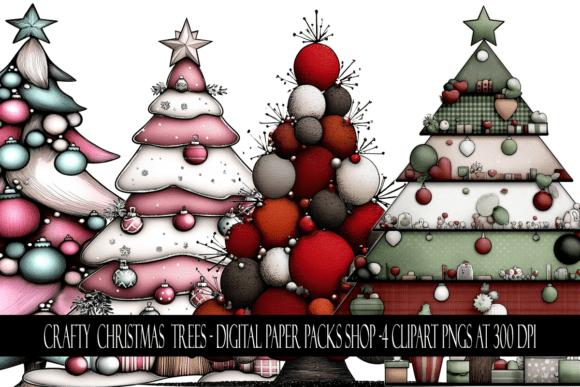
The immediate impression of Crafty Christmas Tree Clipart is one of approachable warmth. Unlike the sterile, vector-perfect trees often found in corporate stock libraries, these designs carry a hand-drawn charm that resonates deeply with the handmade business aesthetic. The lines are organic, suggesting a human touch that aligns perfectly with artisanal products. For a client selling knitted scarves or organic candles, this mood is invaluable. It creates an emotional bridge between the product and the consumer, fostering a sense of nostalgia and comfort.
However, from a technical standpoint, the style requires careful placement. The whimsical nature of the clipart means it does not suit every context. It thrives in environments that celebrate creativity and personal connection but may feel out of place in rigid, minimalist corporate layouts. Understanding this distinction is crucial for any designer aiming to maintain visual hierarchy and brand consistency.
Performance in Real-World Design Scenarios
In my review, I tested how Crafty Christmas Tree Clipart performs across various mediums. For packaging design, such as sticker labels on gift boxes or tags on retail items, the asset excels. The details are distinct enough to remain recognizable at smaller scales, provided the background contrast is managed correctly. When applied to print-on-demand items like tote bags or mugs, the design holds up well, especially when used as a central focal point rather than a repeating pattern.
For digital applications, the versatility is notable. In social media graphics for Instagram or Pinterest, the clipart adds a seasonal flair that boosts engagement. It works exceptionally well in Canva template creations for bloggers and content creators who need quick, high-quality visuals for holiday posts. Furthermore, for those utilizing cutting machines, the potential for Cricut project integration is significant. If the files include SVG formats, crafters can easily scale the designs for vinyl decals, card making, or custom sticker design without losing edge quality.
Strategic Placement and Layout Considerations
Where you place Crafty Christmas Tree Clipart determines its success. It works best as a hero graphic in large layout areas, such as the front of a holiday flyer or the header of an email newsletter. It also serves effectively as a decorative accent in editorial design, breaking up text blocks in a seasonal blog post or magazine feature. However, designers must exercise caution. In crowded layouts or complex backgrounds, the intricate lines of the tree can get lost, reducing readability and visual impact.
Avoid using this asset in projects that require very clean, stark minimalism unless it is significantly simplified. It is not ideal for low-contrast designs where the line weight might blend into the background. Additionally, for professional corporate materials that demand strict adherence to a modern, sleek aesthetic, this whimsical style might clash with the established small business branding guidelines.
Impact on Brand Perception and Trust
The choice of imagery directly influences audience engagement and perceived value. Using Crafty Christmas Tree Clipart signals to customers that the brand values tradition, craftsmanship, and warmth. This enhances visual trust among audiences looking for authentic, non-mass-produced experiences. However, overuse can dilute professionalism. The key is balance. Pairing the illustration with strong typography—such as a bold sans serif font for headlines or a clean script font for accents—creates a sophisticated look that feels both festive and polished.
When integrated into marketing visuals, the asset helps tell a story. It transforms a simple product photo into a lifestyle narrative, suggesting how the item fits into a cozy holiday setting. This emotional appeal is a powerful driver for conversion in the creative marketplace and on platforms like Etsy.
Practical Designer Notes and Technical Checks
Before committing Crafty Christmas Tree Clipart to a final client deliverable, I recommend several practical tests. First, always preview the design in black and white. This ensures that the shape remains recognizable without relying on color cues, which is essential for single-color printing methods like screen printing or vinyl cutting.
- Check Contrast: Test the asset on both light and dark backgrounds to ensure visibility.
- Inspect File Formats: Verify if the download includes high-resolution PNGs with transparent backgrounds and editable SVG or vector files. Transparency is critical for seamless integration into web design and layered compositions.
- Test Print Quality: Print a sample at the intended size to check for pixelation or blurriness, especially for sublimation design or large-format posters.
- Typography Pairing: Experiment with different font styles. While it pairs well with handwritten fonts for a casual look, try a structured display font to add weight and authority to the composition.
- Licensing Verification: Always confirm the commercial license terms. Ensure the asset allows for use in client work, digital products, and physical goods to avoid legal issues down the line.
Ultimately, Crafty Christmas Tree Clipart is a valuable addition to a designer’s toolkit when used with intention. It offers a unique blend of charm and utility that can enhance digital products, printable design sheets, and physical merchandise alike. By understanding its strengths and limitations, designers can leverage this design bundle to create compelling, cohesive, and commercially viable holiday campaigns that resonate with their target audience.