Reviewing the Christmas Manger Scene PNG for Embroidery
As a designer who has spent countless hours digitizing and stitching out holiday motifs, I approach every new asset with a mix of curiosity and skepticism. We all know that what looks crisp on a screen does not always translate cleanly to thread and fabric. Recently, I evaluated the Christmas Manger Scene PNG to determine its viability for real-world embroidery projects. This is not just about whether the image is pretty; it is about whether it holds up under the needle, respects the limitations of hoop sizes, and delivers value to the end customer.
First Impressions and Visual Mood
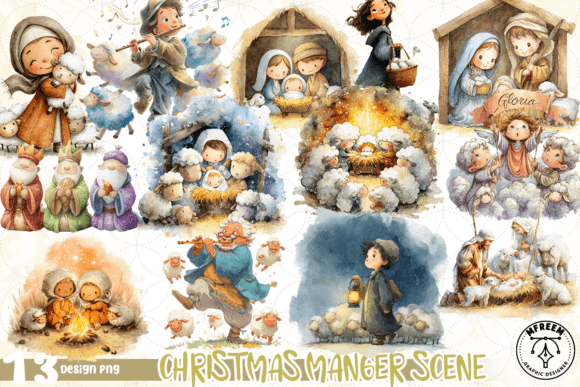
The initial impact of this design is one of quiet reverence. Unlike the chaotic energy often found in commercial holiday graphics, this illustration captures a serene, traditional atmosphere. The layout is balanced, focusing on the central figures without unnecessary clutter. For an embroidery designer, this simplicity is a double-edged sword. It means fewer stitch conflicts and cleaner outlines, but it also demands precision. There is nowhere for poor digitizing to hide when the subject matter is so iconic and recognizable.
The visual personality of the Christmas Manger Scene PNG leans toward classic rather than cartoonish. This makes it versatile. It does not scream "cheap novelty," which is crucial for boutique owners and Etsy sellers aiming for a higher price point. The lines appear distinct, suggesting that with proper conversion or tracing, the resulting machine embroidery design would have clear separation between elements. This clarity is essential for maintaining the integrity of the scene when stitched onto textured fabrics.
Real-World Application Scenarios
To truly test a design, you must imagine it on a physical product. I visualized this scene on a heavy-weight cotton tote bag. The natural beige of the canvas provides a neutral background that allows the thread colors to pop. Using a combination of satin stitch for the text or borders and fill stitch for the larger shapes could create a rich, tactile experience. The design feels substantial enough to anchor a large tote but detailed enough to remain interesting upon close inspection.
Another strong candidate for this artwork is a premium sweatshirt. Holiday embroidery on apparel has surged in popularity, but customers are tired of stiff, plastic-like patches. If this PNG is converted into a well-digitized file with appropriate underlay and pull compensation, it could sit softly on fleece or French terry. The key here is managing the stitch density. A dense fill might make the garment uncomfortable, while a strategic use of running stitch for details could keep the hand feel soft and flexible.
I also considered its use in nursery decor. A pillow cover featuring this scene could become a cherished heirloom. However, baby items require extra caution. The design must be durable enough to withstand washing without fraying or losing shape. This means checking if the original Illustrations have closed shapes that can be properly saturated with stitches, ensuring no loose threads or gaps appear after multiple laundry cycles.
Navigating Technical Challenges
While the aesthetic is strong, practical application requires vigilance. One major consideration is hoop size. This scene likely contains horizontal breadth. If you are working with a standard 4x4 inch hoop, you may need to crop or simplify the design, which could compromise the composition. For a full representation, a 5x7 or larger hoop is advisable. Always confirm the dimensions of your source file before committing to a project.
Fabric choice plays a pivotal role. On dark fabrics, such as navy or black velvet, the contrast becomes critical. You must ensure that the thread colors chosen have enough luminosity to stand out. A common mistake is using mid-tone threads on dark backgrounds, resulting in a muddy appearance. Test your thread palette on scrap fabric first. Additionally, textured fabrics like linen or waffle weave can distort fine details. If the PNG includes tiny elements, they may get lost in the weave. In such cases, increasing the stitch width or simplifying the detail level during digitization is necessary.
Curved surfaces present another hurdle. Applying this design to a cap requires careful placement. The brim curve can distort wide designs. If the manger scene is too wide, it may wrap around the sides of the cap, looking distorted from the front. For headwear, consider scaling down the design or focusing on a single element from the scene rather than the entire composition.
Enhancing Product Value and Brand Trust
For small business owners and craft entrepreneurs, the quality of your design assets directly influences customer trust. A blurry or poorly stitched image suggests a lack of professionalism. Conversely, a crisp, well-executed Christmas Manger Scene PNG elevates the perceived value of the finished product. When customers see clean lines and thoughtful color choices, they are more likely to view the item as a premium personalized gift rather than a mass-produced commodity.
This design fits well within the niche of holiday embroidery that emphasizes tradition and warmth. It appeals to buyers looking for meaningful decor or gifts that convey sentiment. By using high-quality design assets, you maintain brand consistency. If your shop specializes in elegant, handmade products, this illustration aligns perfectly with that identity. It avoids the tacky tropes often associated with seasonal merchandise, thereby attracting a more discerning clientele.
Practical Notes for Designers
Before launching into production, there are several steps every designer should take. First, verify the licensing terms. Ensure that the Christmas Manger Scene PNG allows for commercial use if you intend to sell the finished items. Some digital embroidery files and images have restrictions on the number of units you can produce or prohibit resale entirely. Never assume; always read the license agreement.
Next, perform a black-and-white mockup test. Remove all color from the image to check for contrast and definition. If the elements blend together in grayscale, they will likely merge when stitched, regardless of thread color. This step helps identify areas that may need additional outlining or spacing adjustments.
Stabilizer selection is non-negotiable. For stretchy fabrics like jersey knits, a cut-away stabilizer is essential to prevent distortion. For woven fabrics like cotton or linen, a tear-away may suffice, but a mesh cut-away offers better support for detailed designs. Always hooping firmly and checking the tension settings on your machine can prevent puckering, which ruins even the most beautiful design.
Finally, consider the stitch types. Satin stitch works beautifully for borders and small text, providing a shiny, smooth finish. Fill stitch is ideal for larger areas but can add bulk. Running stitch is perfect for delicate details and shading. A skilled digitizer will blend these techniques to create depth and texture without compromising durability.
In conclusion, the Christmas Manger Scene PNG offers a solid foundation for various embroidery projects, from custom apparel to home decor. Its strength lies in its classic composition and emotional resonance. However, its success depends entirely on the designer’s ability to translate the digital image into a robust machine embroidery design. By paying attention to hoop sizes, fabric textures, and stitch density, you can create a finished product that not only looks beautiful but also stands the test of time. For Etsy sellers and handmade shop owners, this asset represents an opportunity to offer something timeless and tasteful in a market often saturated with fleeting trends.